
Research as a Pleasure Practice
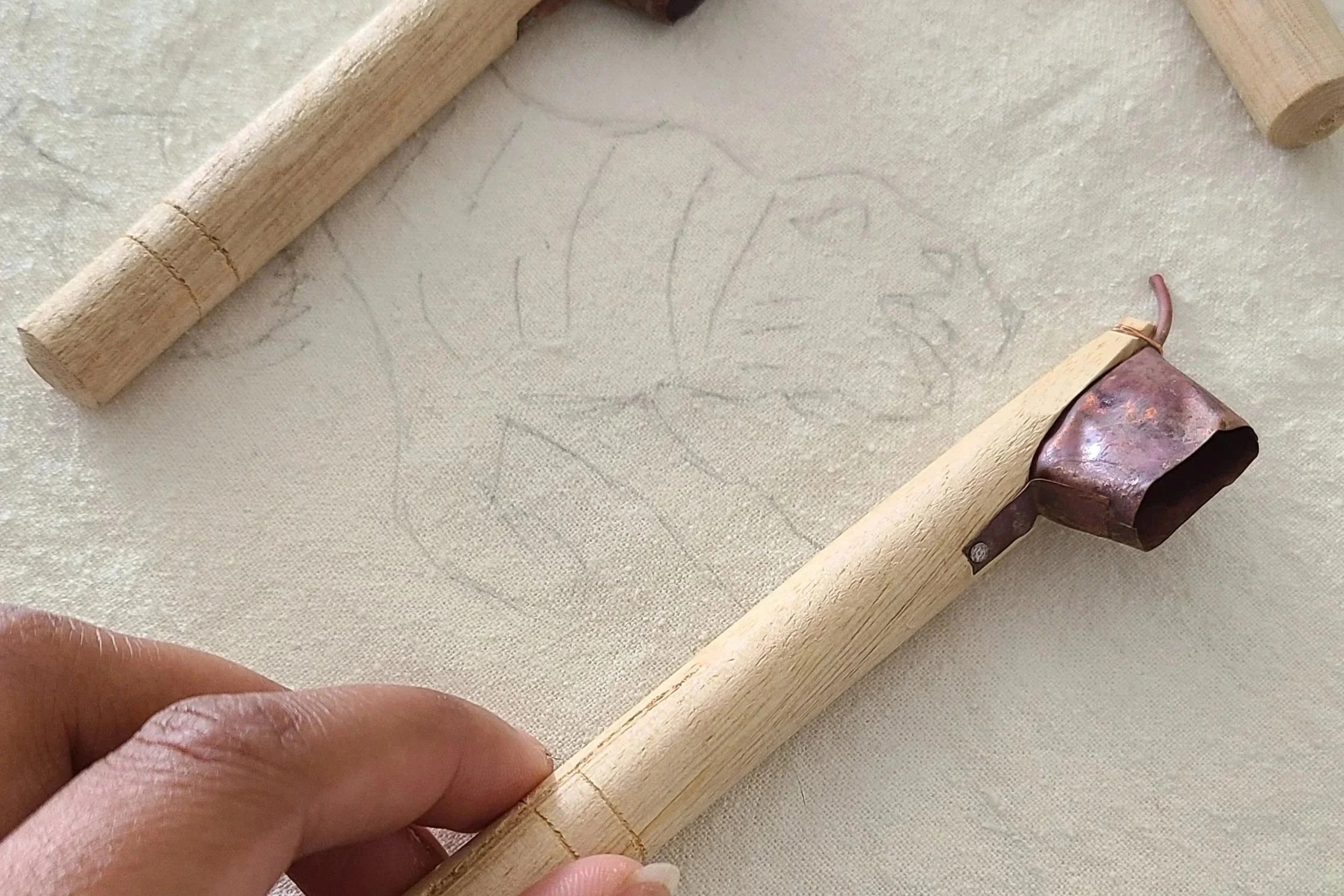
Sabrina’s hands are holding a Javanese tjanting (batik wax pen). Underneath is sketched illustration of a Javanese tiger on a silk cloth. Credit goes to romila barryman for this photo and knowledge exchange.
Research doesn’t have to feel so sterile. We’ve just been taught to think that way.
If you were “formally trained” in research through profession or an institution, you may have cultivated a belief that rigor demands detachment. We learn that:
“Good research” requires distance and neutrality
Credibility requires emotional restraint
Care is primarily about minimizing harm
Unsurprisingly, none of this really feels pleasurable. And that’s because this approach to research ignores the technology and wisdom of the body. The most meaningful engagements are relational. We want to enjoy what we do, and feel connected to what we are inquiring around.
But under the pressures of urgency and performance, research has become an exercise of the mind and of restraint. In this way, whole, complex beings or topics of interest, get reduced into simplified tactics and data points that are void of aliveness. And researchers become further disconnected from the very questions that once moved them.
Pleasure is a practice of choosing to stay whole and human within systems that demand otherwise.
But in order to embrace this, we must first re-pattern the belief that serious inquiry cannot also be pleasurable.
Centering joy or pleasure does not mean being casual about the topic of inquiry.
It does not mean lowering our standards of quality.
It does not mean ignoring power, harm, or consequence.
Rather, it means designing research that feels “alive” and relational.
Centering care and pleasure fundamentally changes the energy of our work and invites us to think more creatively about the experience we’re designing.
In practice, this can look like:
Re-imagining consent conversations and choosing environments to gather that feel human
Designing mutually nourishing and beneficial experiences
Treating story, metaphor, or movement as legitimate modes of inquiry
Allowing for non-linearity and emergence
Inviting the more-than-human to shape and contribute to the process
Doing an activity that feels unrelated to the topic of inquiry itself
If you're curious to explore how research can be rigorous and relational, grounded and imaginative, responsible and joyful - I invite you to consider joining us for our fifth cohort of Reimagining Research, beginning April 2026!